
Door-to-Door vs. Terminal Car Shipping: Which Saves More?
Door-to-door vs. terminal-to-terminal car shipping compared on cost, convenience, timing, and risk. See which option really saves money before you book.
When you ship a car, you have two basic ways to hand it off. With door-to-door shipping, the driver picks up your car at or near your home and drops it off at or near your new address. With terminal-to-terminal shipping, you drive the car to a storage lot, the carrier moves it to another lot, and you pick it up there.
Terminal shipping sounds like it should be the budget option. Sometimes it is. But once you add storage fees, extra trips, and the limited number of terminals in the US, the savings often shrink or disappear. This guide compares both options on cost, convenience, timing, and risk so you can pick the right one. If you want numbers for your own route first, you can get an instant car shipping quote in under a minute.
We will also clear up a common misunderstanding: "door-to-door" does not always mean the truck parks in your driveway. Knowing what it really means helps you plan your pickup day.
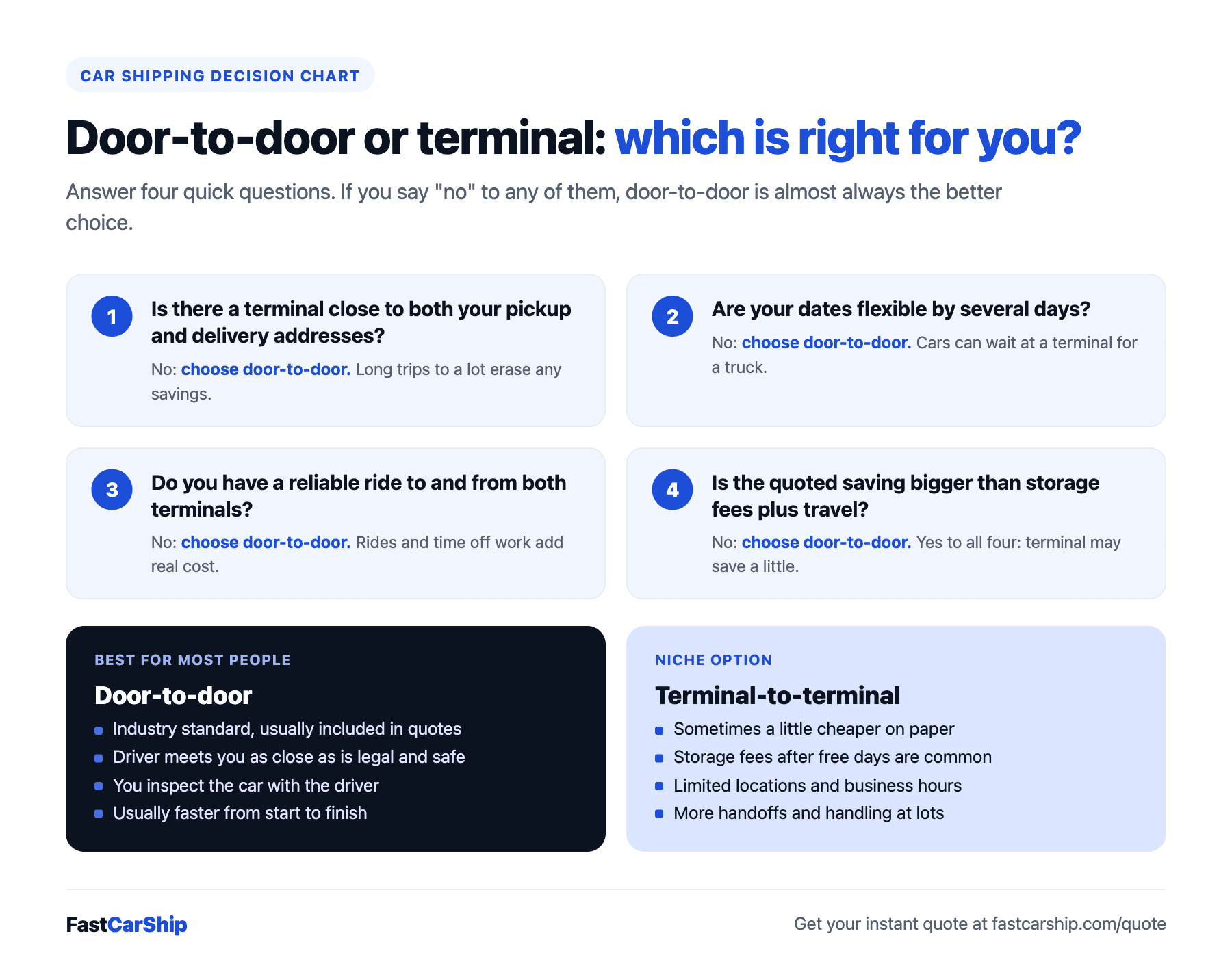
Quick Answer: Door-to-Door or Terminal?
- Door-to-door is the industry standard and the best choice for most people. The driver gets as close to your address as is legal and safe, and most quotes already include it.
- Terminal-to-terminal is less common and may save a small amount on some routes, but storage fees, limited locations, and your own travel time often cancel out the savings.
- Door-to-door is usually faster overall, because the car is not waiting at a lot for a truck to pick it up.
- Choose a terminal only if you live very close to one, your dates are flexible, and you have a reliable way to get to and from the lot.
What Door-to-Door Car Shipping Really Means
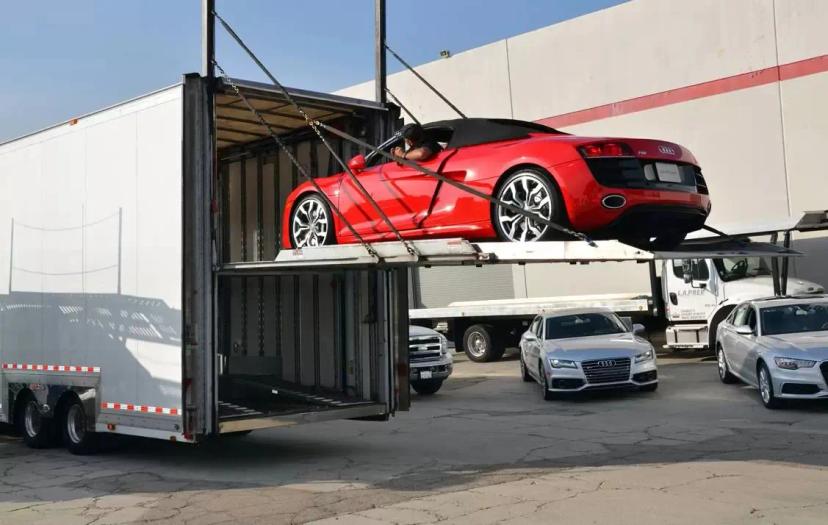
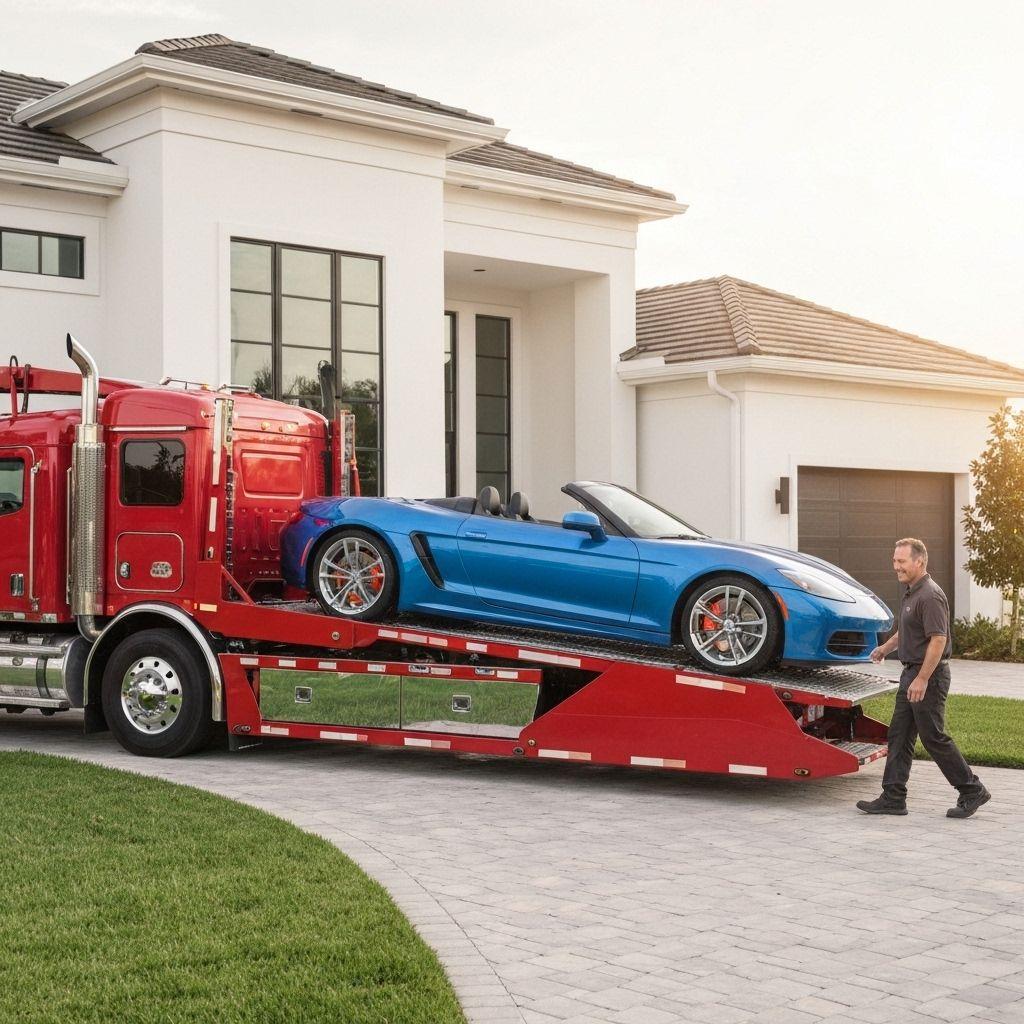
Door-to-door car shipping means the carrier picks up your vehicle at an address you choose and delivers it to another address you choose. That can be your home, your office, a dealership, or a family member's house.
Here is the part many people miss. A full-size car carrier with a loaded trailer is very long and heavy. Many residential streets have low trees, tight turns, weight limits, or HOA rules that keep big trucks out. In those cases, the driver will get as close as legally and safely possible and may ask you to meet at a nearby spot, like a shopping center parking lot, a school lot, or a wide street a few blocks away.
That is still door-to-door service. You are not driving across town to a storage yard, and you hand the keys directly to the driver. The driver will usually call ahead to agree on the exact meeting point.
Why Door-to-Door Is the Default
Most auto transport today runs door-to-door because it fits how carriers already work. A driver plans a route through several cities, picks up cars along the way, and drops them off on the return. Stopping near your address is part of that route. That is why most quotes you see include door-to-door service at no extra charge.
What Terminal-to-Terminal Car Shipping Means
With terminal-to-terminal shipping, you drop your car at a vehicle storage facility near your starting point. The carrier picks it up from that terminal when a truck is heading your way, then drops it at a terminal near your destination. You go to that terminal to collect it.
Terminals are usually in or near large metro areas. If you live in a smaller town, the closest terminal could be an hour or more away. Not every carrier uses terminals, either.
The Hidden Costs of Terminal Shipping
The base price for terminal shipping can look lower, but watch for extra costs:
- Storage fees. Many terminals allow a few free days, then charge a daily fee if your car sits longer. If the truck is late or you cannot pick up on time, those fees add up.
- Your travel costs. You need a ride to the origin terminal after drop-off and a ride to the destination terminal for pickup. Rideshare fares, gas, and time off work all count.
- Extra handling. Your car may be moved, parked, and loaded more times at a busy lot. More handling means more chances for small scrapes.
- Limited hours. Terminals have set business hours. If you arrive late at night or on a holiday, you may have to wait.
Door-to-Door vs. Terminal: Side-by-Side Comparison
| Factor | Door-to-Door | Terminal-to-Terminal |
|---|---|---|
| Base price | Standard rate, usually included in quotes | Sometimes a little lower |
| Extra fees | Rare | Storage fees after free days are common |
| Convenience | High, pickup near your address | Lower, you travel to and from lots |
| Availability | Nearly every US address | Limited to areas with terminals |
| Timing | Pickup within a set window | Car may wait at the lot for a truck |
| Handling | Loaded once, unloaded once | Extra moves at storage lots |
| Inspection | Done with you at your location | Done with lot staff, sometimes without you |
Cost: Does Terminal Shipping Really Save Money?
Sometimes, but usually not as much as people expect. Carriers can save a little time when they pick up several cars from one lot. Some of that saving may be passed on to you. In practice, the difference on many routes is small, and it can vanish once you add storage days and two trips across town.
Here is a simple way to compare. Take the price gap between the two options. Then subtract:
1. The cost of getting to the origin terminal and home again
2. The cost of getting to the destination terminal
3. Any storage days you might pay for if the truck or you run late
4. The value of your time, including time off work
If the number left over is still meaningful to you, terminal shipping might make sense. For most people, it does not. Our complete car shipping cost guide explains the bigger factors, like distance, vehicle size, and season, that move your price far more than the pickup method.
Want to see where your route lands? You can check your price in under a minute and compare options with a specialist.
Convenience and Timing
Door-to-door wins on convenience by a wide margin. You set the address, the driver calls ahead, and you meet them close to home. You do not need to arrange rides or work around a lot's office hours.
Timing is a little more subtle. With door-to-door shipping, carriers usually give a pickup window of 1 to 5 business days. Once loaded, cars travel roughly 400 to 500 miles per day, so a coast-to-coast trip often takes 7 to 10 days.
With terminal shipping, you can often drop the car off on your schedule, which helps if you are leaving town on a fixed date. But the car may then sit at the lot until a truck heading the right way has room. At the other end, it may also wait until you can get there. That means door-to-door is usually faster from start to finish, even if terminal drop-off feels easier on day one.
If timing is tight, season matters too. Summer and snowbird months are busier, so read our guide on the best time of year to ship a car before you lock in dates.
Risk and Vehicle Condition
Every shipment starts and ends with a vehicle inspection recorded on the Bill of Lading. With door-to-door service, you walk around the car with the driver at pickup and again at delivery. You see every note that goes on the form.
With terminal shipping, staff at the lot may do the drop-off inspection, and the car may be moved several times before it is loaded. If a scratch shows up at the end, it can be harder to tell when it happened. That does not mean terminals are unsafe. It just means more steps and more people are involved.
Whichever option you choose, make sure the carrier is properly licensed. You can look up any carrier's USDOT number on the FMCSA website, and our guide on how to verify a car shipping company walks you through it step by step.
| Risk Factor | Door-to-Door | Terminal-to-Terminal |
|---|---|---|
| Number of handoffs | Two (you to driver, driver to you) | Four or more (you, lot, driver, lot, you) |
| Who inspects at pickup | You and the driver | Often terminal staff |
| Time parked outdoors | Minimal | Can be several days |
| Clear damage record | Easier to trace | Harder to trace |
When Terminal Shipping Can Make Sense
Terminal shipping is not a bad option. It just fits a narrow set of situations. It can work well if:
- You live very close to a terminal at both ends of the trip
- You are leaving before the pickup window opens and have nobody to hand the keys to
- Your destination is a short-term address, like a hotel, where a truck cannot meet you
- Your dates are flexible and a few extra days at a lot will not cause problems
Many movers in this spot have a simpler fix: ask a friend, neighbor, or family member to meet the driver. Door-to-door service works with anyone you authorize, as long as they can sign the Bill of Lading and hand over the keys. If you are relocating, our moving out of state car checklist covers how to plan this around your other moving tasks.
When Door-to-Door Is the Better Choice
For most people, door-to-door is the right call. It is especially smart if:
- You are moving a family and juggling many tasks
- You bought a car online or from a dealer in another state and want it delivered (see our guide to getting an out-of-state car delivered)
- You live in a suburb, small town, or rural area without a nearby terminal
- You are shipping a valuable or newly purchased car and want to inspect it yourself
- You do not want to deal with storage fees or extra rides
Door-to-door also pairs well with open car transport, which is how most cars ship in the US and the most budget-friendly carrier type.
How to Get the Best Price Either Way
The pickup method is only one part of your price. These steps usually save more:
1. Be flexible with dates. A wider pickup window helps the carrier fit your car into an existing route.
2. Ship between larger cities when you can. Major routes have more trucks.
3. Avoid peak weeks. Summer and the first and last days of the month are busiest.
4. Choose open transport unless your car truly needs enclosed protection.
5. Pick a truck-friendly meeting spot. A wide, open lot near your home makes door-to-door pickup quick and easy.
6. Use a licensed carrier. Learn how the industry works in our guide to auto transport brokers vs. carriers.
You can see every step from quote to delivery on our how it works page.
The Bottom Line
Door-to-door car shipping is the standard for a reason. It is convenient, usually faster from start to finish, and already included in most quotes. Terminal-to-terminal shipping can save a little on some routes, but storage fees, limited locations, and extra trips often erase the difference.
If you live next to a terminal and have flexible dates, it is worth asking about. For everyone else, door-to-door is the simpler and often cheaper choice once you count the full cost.
Ready to compare your options? Get your free instant quote and see a price range for your route right now. An auto transport specialist will contact you shortly with an accurate quote.
Frequently Asked Questions
Is terminal-to-terminal car shipping cheaper?
Terminal shipping can be a little cheaper on some routes, but not always. Once you add storage fees, rides to and from the terminals, and your time, the savings are often small or gone. Compare the full cost before you decide.
Will the truck come all the way to my house?
The driver will get as close as is legal and safe. If your street is narrow, has low trees, or bans large trucks, the driver may ask to meet you at a nearby parking lot or wide street. This is normal for door-to-door service.
How much are terminal storage fees?
Fees vary by terminal. Many lots give a few free days and then charge a daily fee. Ask for the exact terms in writing before you drop off your car.
Can someone else meet the driver for me?
Yes. A friend, relative, or neighbor can release or receive the car if you authorize them. They should inspect the car with the driver, sign the Bill of Lading, and hand over or accept the keys.
Is door-to-door shipping faster?
Usually, yes. With door-to-door service, the car is loaded directly onto the truck and delivered to your area. With terminal shipping, the car can wait at a lot before and after the trip.
Does door-to-door shipping cost extra?
In most cases, no. Door-to-door is the standard service and is usually built into your quote. Very remote or hard-to-reach addresses may cost more because the driver has to travel off the main route.