Moving Out of State Car Checklist: Title, Registration & Shipping
Moving out of state with a car? Use this checklist for title transfer, new registration, insurance, inspections and shipping so you never miss a DMV deadline.
Moving to a new state means a long list of chores, and your car brings its own set: a new title, new plates, new insurance, maybe an inspection, and a new driver's license. Miss a deadline and you could face late fees, a ticket for expired out-of-state plates, or trouble with your insurance after a claim.
This checklist puts every car task in order, from four weeks before the move to your first month in the new state. It also helps you decide whether to drive the car yourself or ship it. If you already know your move date, you can get an instant car shipping quote now and cross the biggest item off your list.
Rules differ from state to state, so treat this guide as your plan and your new state's official DMV website as the final word on deadlines, fees, and forms.
Quick Answer: What Do You Need to Do With Your Car When You Move Out of State?
- Register the car and get new plates in your new state, usually within about 30 to 60 days of becoming a resident. Check your new state's DMV site for the exact deadline.
- Transfer the title to your new state at the same visit. If you have a loan or lease, contact your lender or leasing company first, because they hold the title.
- Update your car insurance to a policy that meets your new state's minimum coverage before you register.
- Get any required inspection (safety, emissions, or VIN verification) and switch your driver's license, which often has its own deadline.
- Decide how the car gets there. Driving works for short moves. For long moves, shipping often costs about the same as driving once you add gas, hotels, and time off.
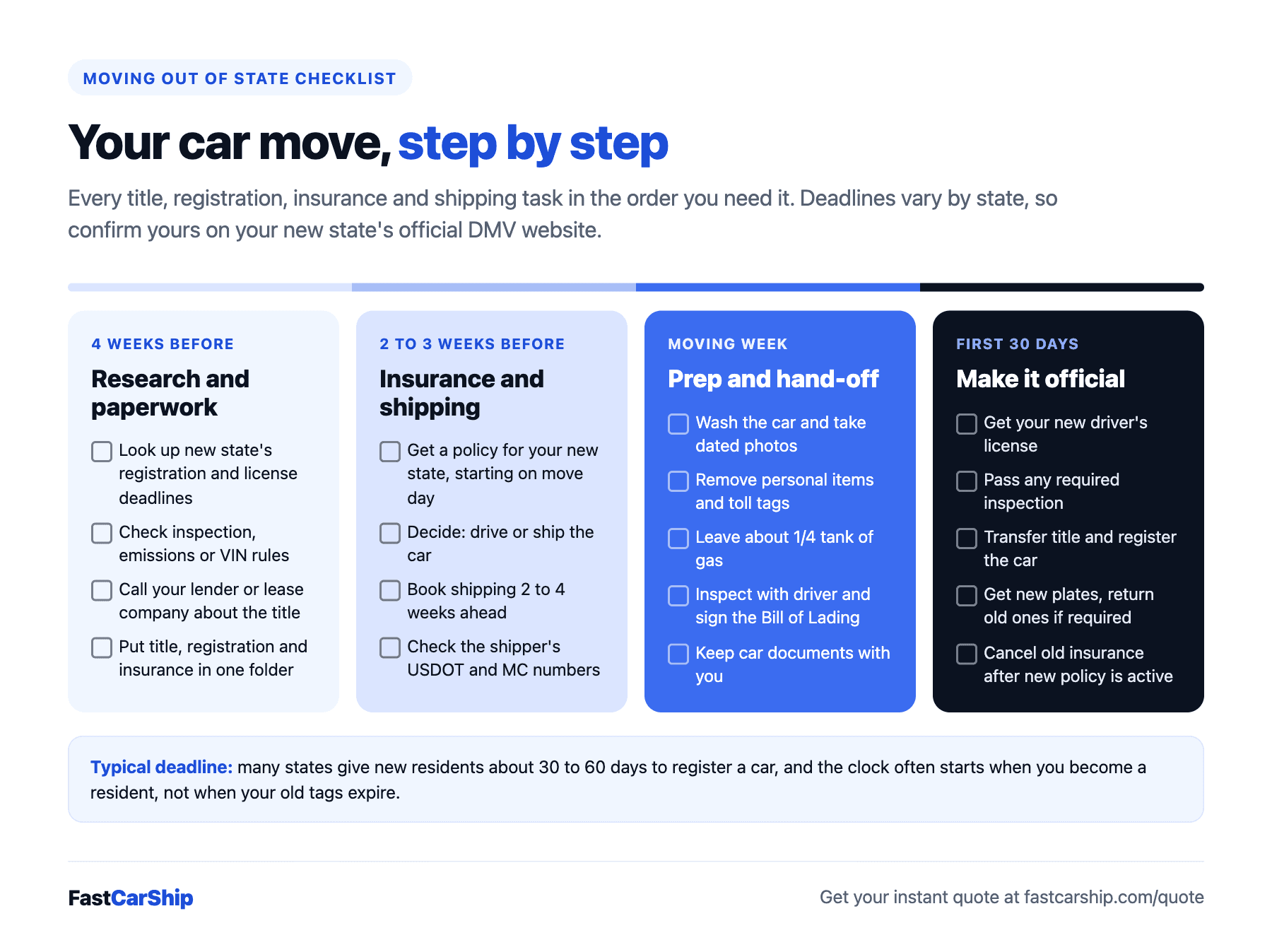
Before the Move: 4 Weeks Out
The month before a move is when most car problems can be avoided. A few phone calls now save you a second trip to the DMV later.
Look up your new state's rules
Find your new state's official motor vehicle agency website. Search for "new resident" or "moving to" pages. Write down three things:
1. How many days you have to register your car after you become a resident
2. How many days you have to get a new driver's license
3. Whether the state requires a safety inspection, emissions test, or VIN verification for cars coming from out of state
If you are not sure where to start, the federal government's USA.gov motor vehicle services page links to every state's official agency.
Gather your car documents
Put these in one folder that travels with you, not with the moving truck:
- Current title (or your lender's contact details if you have a loan)
- Current registration card
- Proof of insurance
- Driver's license
- Proof of your new address, such as a lease or closing documents
- Recent maintenance and emissions records, if you have them
Call your lender or leasing company
If you still owe money on the car, the lender usually holds the title. If you lease, the leasing company owns the car. Call them before you move and ask:
- How they handle title requests from another state's DMV
- Whether they need to approve the car leaving the state (common with leases)
- What paperwork they will send, and how long it takes
In many states, the new DMV requests the title from your lender directly, or the lender sends a copy for registration. Each lender has its own process, so ask early. This step causes more delays than any other.
Before the Move: 2 Weeks Out
Shop for insurance in your new state
Call your current insurer. If they write policies in your new state, they can usually move your coverage over. If not, get quotes from insurers that do. Rates often change with the new ZIP code, sometimes a lot.
Ask the insurer to start the new policy on your move date. Most DMVs want proof of in-state insurance before they will register the car, so you need this in hand first.
Decide: drive or ship?
This is the biggest choice on the list. Here is how the two options usually compare:
| Factor | Driving Your Car | Shipping Your Car |
|---|---|---|
| Best for | Moves under about 500 miles | Moves over about 800 miles |
| Your time | 1 day per 400 to 500 miles of driving | None; you fly or drive another car |
| Out-of-pocket costs | Gas, hotels, meals, possible repairs | One transport price |
| Wear on the car | Adds miles, tire wear, and road risk | No added miles |
| Moving with two cars | Two drivers needed | One booking covers both |
| Coast to coast | 5 to 7 days of driving | About 7 to 10 days in transit, no driving |
For a sedan on an open carrier, coast-to-coast shipping usually runs about $1,200 to $2,000. Shorter routes under 500 miles typically cost about $1.00 to $2.00 per mile. Our car shipping costs guide breaks down every factor that moves the price.
If you choose to ship, book now. Two weeks is the minimum for most routes, and three to four weeks is safer in summer. Our guide to the best time of year to ship a car shows which months are busiest. You can check your shipping price in under a minute and lock in a pickup window that fits your move.
Watch out for low-ball offers
A quote far below every other quote is a warning sign, not a deal. Read our guide to common car shipping scams before you pay any deposit.
Moving Week
Prepare the car for pickup or the drive
Whether you drive or ship, the car needs some prep:
- Wash it so any dents and scratches are easy to see
- Take dated photos of every side, the roof, and the interior
- Remove personal items and toll tags
- Leave about a quarter tank of gas if you are shipping
- Check tires, fluids, and the battery
See our car shipping preparation tips for the full list.
Keep documents with you
Do not pack your title, registration, or insurance cards in a moving box. You will need them at the DMV, and boxes get lost or delayed.
Hand off the car
If you are shipping, you or someone you trust signs the Bill of Lading at pickup after inspecting the car with the driver. Choosing door-to-door car shipping means the truck comes as close to your old and new homes as it can legally and safely reach, so you do not have to drive to a terminal on your busiest week.

First 30 Days in Your New State
Once you arrive, the clock starts. Many states start counting from the day you become a resident, which can mean the day you start a job, sign a lease, or enroll kids in school.
Get your new driver's license
Many states ask you to get your new license before, or at the same visit as, registering your car. Bring your old license, proof of identity, your Social Security number, and two proofs of your new address. Some states may require a vision test.
Get any required inspection
Some states require a safety inspection, an emissions test, or both, depending on the county. Some also require a VIN verification for cars titled in another state, where an official checks that the VIN on the car matches your title. Find out where to get it done and whether it must happen before you register.
Transfer your title and register the car
At the DMV, you will usually turn in your old title (or the lender's paperwork) and get a new title from your new state. You will register the car, pay fees, and get new plates.
Fees vary a lot. Some states charge a flat fee, while others base it on the car's value, weight, or age. A few states charge a tax on cars brought in by new residents, though many give credit for sales tax you already paid. Ask about this before your visit so the bill is not a surprise.
Return or surrender your old plates
Some states want you to mail back or turn in your old plates. Others let you keep them. Check your old state's rules, because some states may keep your old registration active until the plates are returned.
Cancel your old registration and insurance
Once your new policy and registration are in place, cancel your old insurance. Do not cancel it before your new coverage starts, even for a day. A gap in coverage can raise your rates.
Moving Out of State Car Checklist at a Glance
| When | Task | Who to Contact |
|---|---|---|
| 4 weeks before | Look up new state's car and license deadlines | New state DMV website |
| 4 weeks before | Request title process from lender or lease company | Your lender or lessor |
| 3 to 4 weeks before | Book car shipping, if not driving | Auto transport specialist |
| 2 weeks before | Set up insurance for new state | Your insurance company |
| Moving week | Prep car, take photos, keep documents with you | You |
| First 1 to 2 weeks | Get new driver's license | New state DMV |
| First 30 days | Inspection, title transfer, registration, plates | New state DMV or inspection station |
| After registering | Return old plates, cancel old policy | Old state DMV, old insurer |
Moving With a Leased Car
Most leasing companies allow you to move with the car, but they need to know. They usually send the registration paperwork to the new state for you, because they own the car. Call them first.
State Guides for Your Move
Every state has its own routes, prices, and seasonal patterns. Pick your destination or starting point for a state-specific shipping guide, or browse every state on our state car shipping hub.
- Sun Belt: Florida, Texas, Arizona, Georgia, North Carolina, Tennessee, Nevada
- West: California, Washington, Colorado, Oregon, Utah
- Northeast: New York, New Jersey, Massachusetts, Pennsylvania
- Midwest: Illinois, Michigan, Ohio, Minnesota
Common Mistakes to Avoid
1. Waiting until your old registration expires. Your new state's deadline usually starts when you become a resident.
2. Canceling insurance too soon. Keep your old policy until the new one is active.
3. Booking shipping at the last minute. It usually costs more. If you are in a rush, expedited car shipping is available for an added fee.
Your Car, Handled Before Moving Day
A smooth move with a car comes down to timing. Look up your new state's deadlines early, call your lender and insurer before you pack, and decide whether to drive or ship at least a few weeks out. Once you arrive, get your license, inspection, title, and registration done in your first month.
If shipping makes sense for your move, start now so your car arrives when you do. Get your free instant quote with your pickup and delivery ZIP codes and your move date. An auto transport specialist will contact you shortly with an accurate quote. You can also read how it works to see every step from booking to delivery.
Frequently Asked Questions
How long do I have to register my car after moving to another state?
It depends on the state, but many give new residents about 30 to 60 days, and a few give less. The clock often starts when you become a resident, such as when you start a job or sign a lease. Check your new state's official DMV website for the exact deadline.
Can I register my car in a new state if I still have a loan on it?
Yes. Your lender holds the title, so contact them before you move. In many states, the DMV requests the title from the lender or accepts the lender's paperwork, and the lender stays listed on your new title until the loan is paid off.
Do I need new car insurance when I move out of state?
Yes. You need a policy that meets your new state's minimum coverage, and most DMVs want proof of it before they register your car. Start the new policy on your move date and cancel the old one only after the new one is active.
Is it cheaper to drive or ship my car when moving?
For short moves under about 500 miles, driving is usually cheaper. For long moves, shipping often costs about the same as driving once you add gas, hotels, meals, and time off work, and it adds no miles to your car.
What documents do I need to register a car in a new state?
Usually your current title or lender information, proof of in-state insurance, your driver's license, proof of your new address, and any required inspection certificate. Some states also need a VIN verification for cars from out of state.
How far ahead should I book car shipping for a move?
Book at least two weeks ahead for most routes and three to four weeks ahead in summer. Booking early gives your auto transport specialist time to find a reliable carrier at a fair price.