Ship a Car Bought Out of State: How to Get Your New Car Home
Need to ship a car bought out of state? Learn who arranges transport, how to handle title, temp tags and taxes, and what to check at delivery. Plan it here.
You found the right car at the right price. The only catch is that it is 900 miles away. Buying online, from an out-of-state dealer, or from a private seller across the country is more common than ever, but getting the car home raises a lot of questions. Who sets up the shipping? Where does the title go? Can the car be picked up before you have plates?
This guide walks through every step, from the moment you agree on a price to the moment the car rolls off the truck in your driveway. You will learn who usually arranges transport, how to handle the paperwork, what dealers need before they release a car, and how to inspect it at delivery. If you already have the pickup and delivery ZIP codes, you can get an instant quote to ship your car home right now.
The good news: shipping a car you bought out of state is routine. Dealers, auction buyers, and online car retailers do it every day. You just need to line up a few details in the right order.
Quick Answer: How Do You Get a Car Bought Out of State Delivered?
- Pay for the car and get the paperwork first. Make sure the title (or the dealer's title process) and bill of sale are in order before transport is booked.
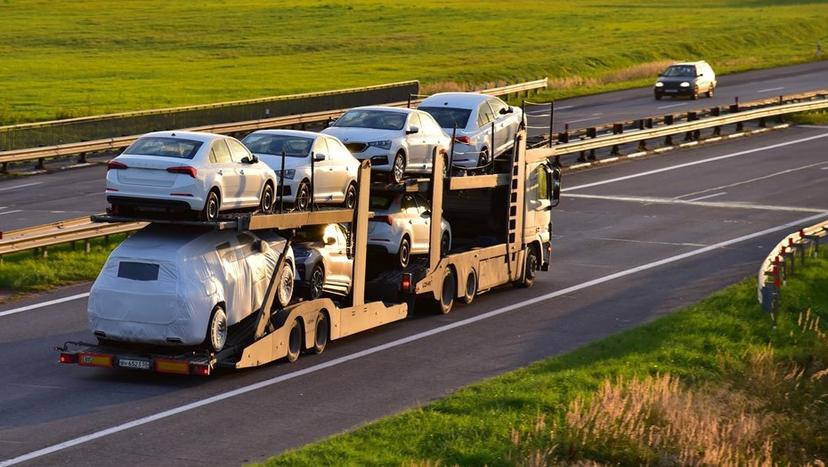
- Book a licensed carrier for door-to-door delivery. Open transport is the standard choice and usually costs less than flying out and driving back for long distances.
- Give the seller a release authorization with the carrier's name, pickup window, and any gate pass needed.
- Inspect the car at delivery against the Bill of Lading, then title, register, and pay sales tax in your home state.
Who Arranges Shipping When You Buy a Car Out of State?
It depends on who you buy from. Here is how it usually works.
| Seller Type | Who Usually Arranges Shipping | What to Watch For |
|---|---|---|
| Large online car retailer | Often the retailer, for a fee or included | Delivery may be limited to certain areas; check the fee |
| Out-of-state franchise or used dealer | You, or the dealer can recommend a company | Dealer may mark up shipping; compare an independent quote |
| Private seller | You | You must coordinate pickup times and payment safely |
| Auction purchase | You, often within a short pickup deadline | Storage fees can start quickly if the car is not picked up |
When the dealer offers to handle shipping, ask for the price in writing and compare it with an independent estimate. Sometimes the dealer's price is fair and convenient. Sometimes it includes a markup. Either way, you should know what you are paying for.
If you arrange it yourself, door-to-door car shipping is the simplest option. The driver picks up at the dealership or seller's address and delivers as close to your home as is legal and safe.
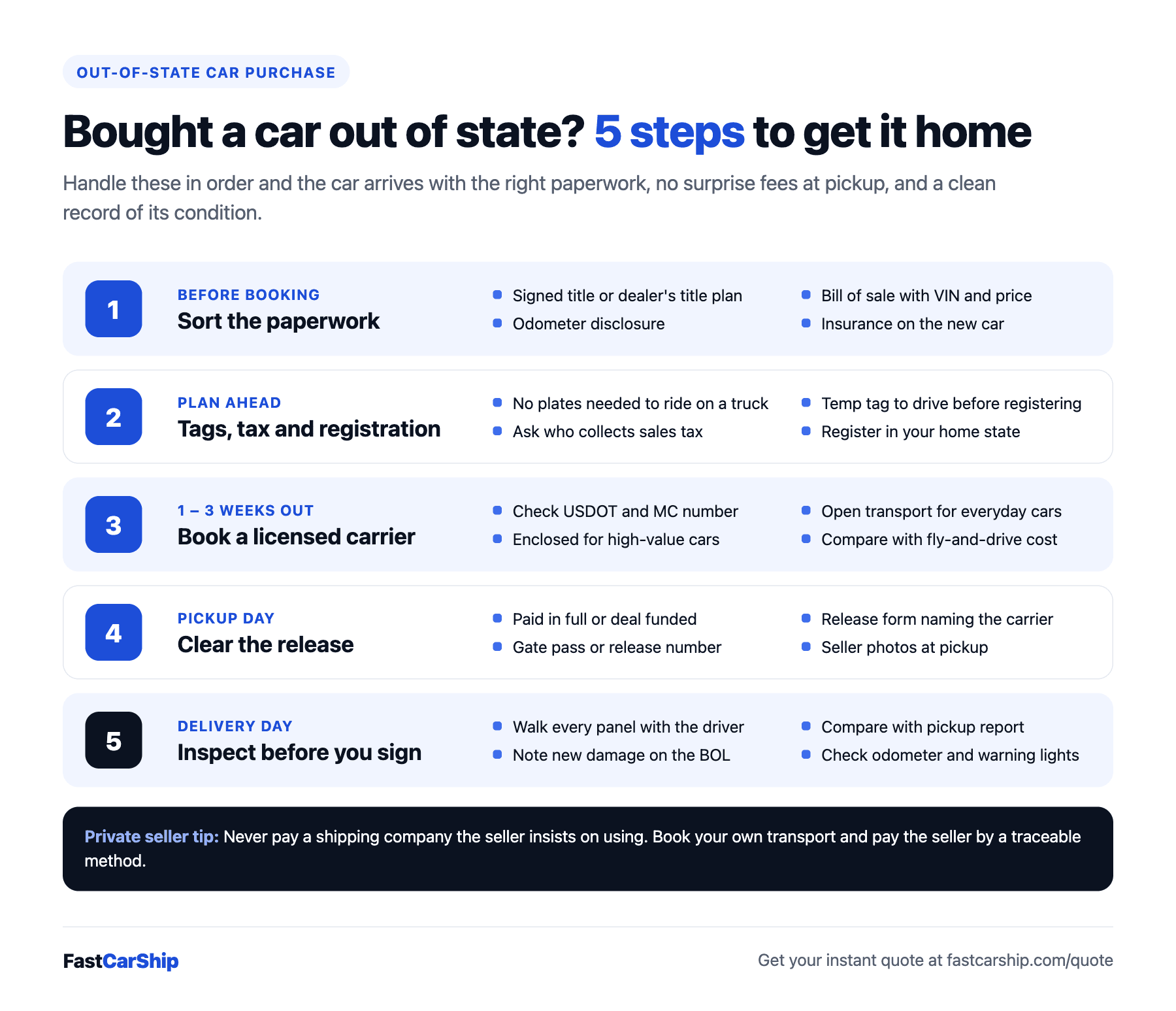
Step 1: Get the Title and Paperwork Sorted
Paperwork is where out-of-state purchases go wrong most often. Before you book transport, confirm these items.
Buying from a dealer
Dealers usually handle the title transfer. Some dealers will process your home-state registration and collect your home-state sales tax. Others only sell to you and leave registration to you. Ask which one applies and get it in writing. Also ask how and when the title or title paperwork will be sent to you.
Buying from a private seller
With a private sale, you must get the signed title from the seller. Never ship a car without a clear plan for the title. If the seller still has a loan on the car, the lender holds the title, and you will need to work through the payoff process before the title can be transferred. A notarized bill of sale is a good idea even when your state does not require one.
Documents to have on hand
- Signed title, or written confirmation of how the dealer will deliver it
- Bill of sale with the VIN, price, date, and both parties' names
- Odometer disclosure (often part of the title)
- Proof of insurance on the new car
- A release authorization for the carrier (more on this below)
Call your auto insurer before pickup. Most insurers can add a new car to your policy the day you buy it, and you will want coverage in place before the car goes on the truck.
Step 2: Temporary Tags and Registration
A car shipped on a truck does not need to be driven on the road, so it usually does not need plates for transport. That is one of the big advantages of shipping over flying out and driving home.
Still, you will need temporary tags or a transit permit if you plan to drive the car before it is registered in your state. Many dealers issue a temporary tag at sale. Some states also issue in-transit permits. The rules vary, so check with the dealer and your state motor vehicle agency.
Once the car arrives, you will typically title and register it in your home state and pay sales or use tax there. If the dealer collected tax for the selling state, ask your state agency whether you get credit for it so you do not pay twice. Our moving out of state car checklist covers title, registration, and insurance steps that apply here too.
Step 3: Book the Transport
Car shipping costs depend mostly on distance, vehicle size, season, and transport type. These are typical industry ranges for a standard sedan on an open carrier.
| Distance | Typical Rate | Example Total |
|---|---|---|
| Under 500 miles | About $1.00 – $2.00 per mile | About $400 – $800 for 400 miles |
| 500 – 1,500 miles | About $0.70 – $1.20 per mile | About $700 – $1,200 for 1,000 miles |
| Over 1,500 miles | About $0.50 – $0.80 per mile | About $1,000 – $1,600 for 2,000 miles |
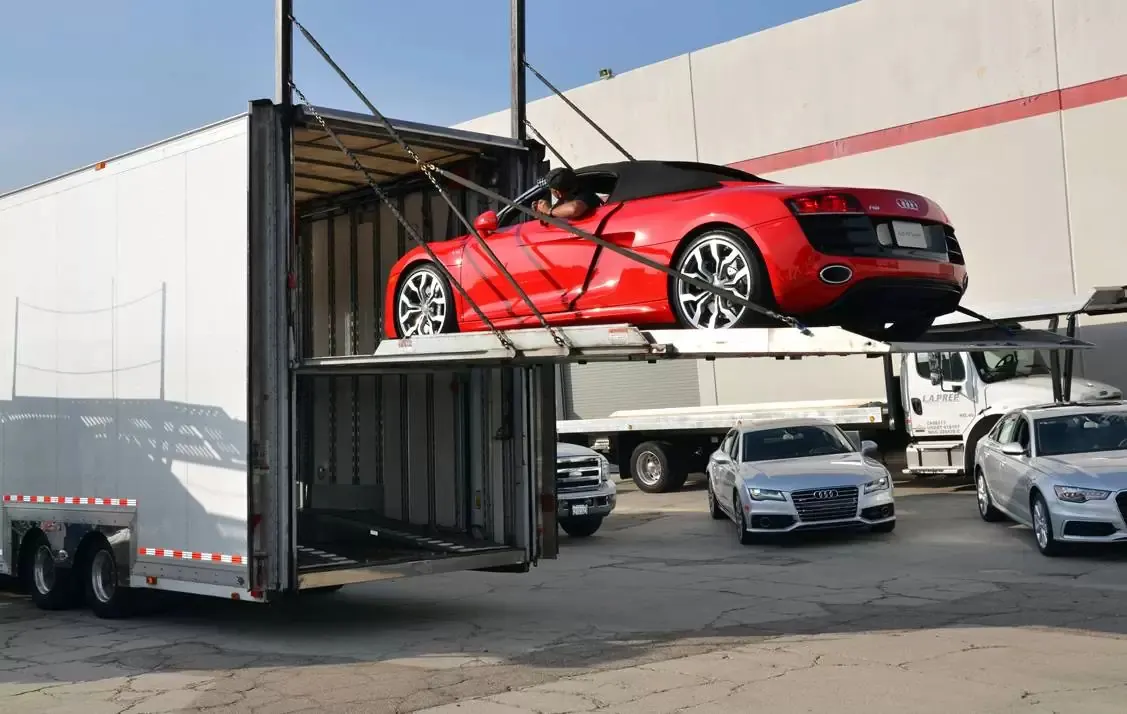
Open car transport is how most dealers move cars, and it is the best value for everyday vehicles. For a high-value, classic, or exotic purchase, enclosed auto transport protects the car from weather and road debris and typically costs about 40% to 60% more. Our car shipping costs guide explains each pricing factor.
Compare the shipping cost with the cost of flying out and driving home: a one-way flight, hotel nights, fuel, meals, and time off work. For trips over a few hundred miles, shipping is often close in cost and much easier. You can check your price in under a minute.
Choose a trustworthy company
Because you are paying a stranger to move a car you have not seen in person, take a few minutes to check the company. Our guide on how to verify a car shipping company's FMCSA and MC number shows you how to look up any carrier's authority and insurance on the official FMCSA system. It also helps to understand the difference between a broker and a carrier.
Step 4: Arrange Pickup From the Dealer or Seller
The pickup is where most delays happen. A truck arrives, and the dealer will not release the car. Avoid this with a little prep.
What dealers usually require
- A release authorization. Many dealers need a signed note or email from you naming the transport company and confirming they may take the car.
- Proof of payment. The car must be paid in full, or the deal funded, before release.
- A gate pass or release number. Auctions and some large dealers use gate passes. Send it to your transport specialist as soon as you have it.
- Business hours. Most dealers release cars only during business hours, and many are closed or short-staffed on Sundays.
Private seller safety
With a private sale, the seller will meet the driver. Protect both sides:
1. Pay through a traceable method, such as a bank wire confirmed by phone with your bank, or meet the seller at a bank.
2. Never pay a "shipping company" that the seller insists you use. That is a common scam pattern. Read our guide to car shipping scams before you send money.
3. Get the signed title before or at pickup, or have a clear written agreement on how it will be sent.
4. Ask the seller to take time-stamped photos of the car with the driver at pickup.

Step 5: Inspect the Car at Delivery
At pickup, the driver inspects the car and records its condition on the Bill of Lading. Since you were probably not there, ask the seller or dealer for photos taken that day. Those photos and the pickup Bill of Lading are your baseline.
When the car arrives:
1. Walk around the car with the driver before you sign anything. Check every panel, the roof, the bumpers, and the wheels.
2. Compare with the pickup report. Any new damage should be written on the delivery Bill of Lading before you sign.
3. Take photos of the car and of any damage, in good light.
4. Check the odometer against the pickup reading.
5. Start the car and look for warning lights.
If there is new damage, note it on the Bill of Lading, take photos, and contact the carrier as soon as possible. Follow the carrier's claim deadline. Signing a clean Bill of Lading makes a later claim much harder.
Keep in mind the driver is inspecting for transport damage only. Mechanical issues or problems that existed before the sale are a matter between you and the seller, which is why a pre-purchase inspection before you buy is always a smart move.
How Long Does It Take?
Once the car is picked up, transit usually takes about one day for every 400 to 500 miles. A 1,000-mile trip often takes 2 to 4 days, and coast to coast usually takes 7 to 10 days. Add a pickup window of 1 to 5 business days. If you need the car sooner, expedited car shipping can shorten the pickup window for an extra fee.
Get Your New Car Home Without the Road Trip
Shipping a car you bought out of state is simple when you handle things in order: paperwork, insurance, transport, release, and inspection. Confirm how the title and taxes will be handled, give the dealer or seller a clear release plan, and inspect carefully at delivery.
Ready to see the cost? Get your free instant quote to ship your car home. An auto transport specialist will contact you shortly with an accurate quote. You can also read how it works from booking to delivery.
Frequently Asked Questions
Can I ship a car I bought from a private seller in another state?
Yes. You arrange the transport, and the seller meets the driver at pickup. Make sure the car is paid for safely, the title is signed or its delivery is agreed in writing, and the seller knows the pickup window.
Do I need plates to ship a car?
Usually not. The car rides on the truck, so it does not need to be road-legal for transport. You will need temporary tags or registration before you drive it in your home state.
Where do I pay sales tax when I buy a car out of state?
In most cases you pay sales or use tax in the state where you register the car. If the dealer collected tax for another state, ask your state motor vehicle agency whether you get credit for it.
What does a dealer need before releasing a car to a carrier?
Most dealers need proof the car is paid for, a release authorization naming the transport company, and sometimes a gate pass or release number. Confirm the dealer's business hours for pickup.
How much does it cost to ship a car bought out of state?
It depends on distance and vehicle type. On an open carrier, short trips typically cost about $1.00 to $2.00 per mile, mid-range trips about $0.70 to $1.20 per mile, and long trips about $0.50 to $0.80 per mile.
Is it cheaper to ship the car or fly out and drive it home?
For short distances, flying out and driving can be cheaper. For trips over several hundred miles, the cost of a flight, hotels, fuel, and time off often comes close to the price of shipping, and shipping adds no miles to the car.