

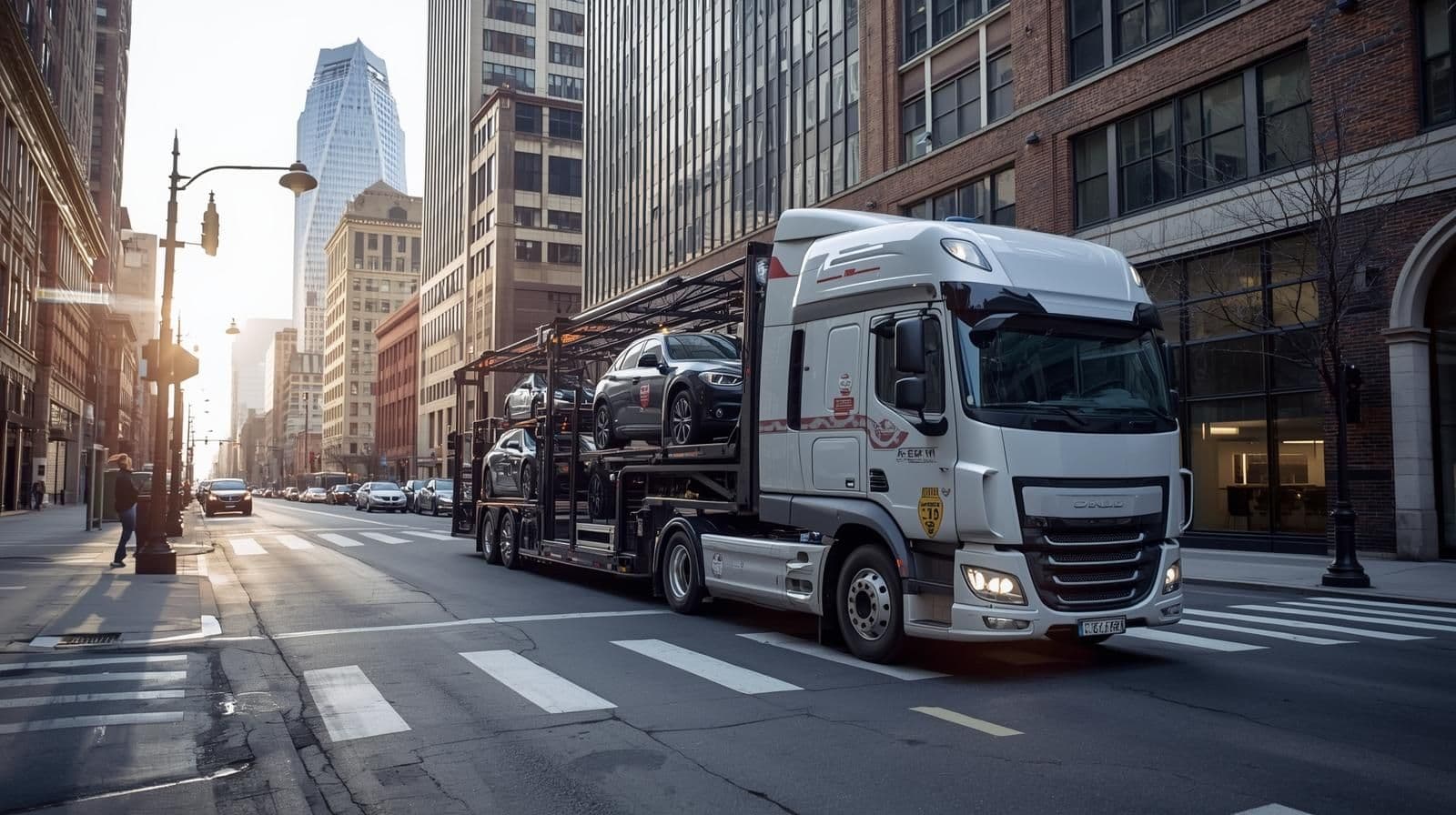
Car Transport from San Francisco to Los Angeles: Step-by-Step Guide (2026)
Most people shipping a car from San Francisco to Los Angeles in 2026 pay somewhere between $450 and $750 on an open carrier. The reason the number lands in that band is simple: this is one of the densest auto-transport lanes in the country. Carriers run the Bay Area to Southern California corridor every single day, so trucks are always rolling and you are rarely waiting on a rare slot. That high volume keeps the price honest. Before you book anything, it helps to understand exactly what you are paying for and which factors push your quote toward the top or bottom of that range.
What You Actually Pay on the SF-to-LA Lane
The drive is about 380 miles whether a carrier takes I-5 down the Central Valley or US-101 along the coast. Most multi-car haulers use I-5 through I-580 because it is faster and the grades are gentler for a loaded 75-foot rig. At roughly 380 miles this is a short-to-mid lane, which is why per-mile pricing here runs higher than a cross-country move but the total stays low. You are paying for a single day of a driver's time and a slot on a trailer, not a week on the road.
Four things move your number inside the $450-$750 window. Vehicle size is the biggest: a compact sedan is cheaper than a lifted truck or a three-row SUV that eats two slots of deck space. Operability matters next; a non-running car needs a winch and bumps the price. Your pickup and delivery points matter too. A door-to-door run from a flat street in Sunnyvale to a wide lot in the San Fernando Valley is easy. A pickup on a steep one-way in Russian Hill or a delivery to a tight DTLA block forces the driver to meet you at a nearby lot, and that access friction can add to the quote.
Open vs. Enclosed on This Corridor
Open transport is what 90% of SF-to-LA shipments use, and for a normal daily driver it is the right call. Enclosed transport runs roughly 40% to 70% more, so on this lane you are typically looking at $700 to $1,100 for a covered trailer. It is worth it for a low-clearance exotic, a restored classic, or a car you simply do not want collecting Central Valley dust and bug splatter for a day. For everything else, open is safe and the savings are real.
2026 Price Ranges by Distance
Here is how the San Francisco-to-Los Angeles run compares to other West Coast lanes so you can sanity-check any quote you get. These are typical 2026 open-transport ranges for a standard operable sedan.
| Route | Distance | Open Transport | Transit |
|---|---|---|---|
| San Francisco to Los Angeles | ~380 mi | $450 - $750 | 1 - 3 days |
| Sacramento to Los Angeles | ~385 mi | $450 - $700 | 1 - 3 days |
| San Francisco to San Diego | ~500 mi | $550 - $850 | 2 - 4 days |
| Los Angeles to Phoenix | ~375 mi | $400 - $650 | 1 - 3 days |
| Seattle to Los Angeles | ~1,135 mi | $900 - $1,300 | 3 - 5 days |
If a quote comes in far under the bottom of this table, treat it as a flag rather than a deal. Lowball quotes on a busy lane usually mean the broker priced it below what any driver will accept, so your car sits unassigned while better-paying loads move first.
That dynamic is worth understanding before you book; we break it down in why the cheapest car shipping quote is risky.
How to Pay Less Without Picking a Bad Carrier
Because trucks run this corridor constantly, flexibility is your cheapest lever. A few practical moves that actually lower the price:
- Give a pickup window of 3 to 5 days instead of a single date. Drivers fill empty slots cheaply, and a flexible window can save 10% to 15%.
- Ship door-to-door from accessible streets. Meeting the carrier at a wide retail lot near a freeway on-ramp beats forcing a rig up a narrow hill.
- Book 1 to 2 weeks out rather than next-day. Rush bookings on short notice cost more even on a dense lane.
- Skip enclosed unless the car truly needs it. Open transport on a one-day run carries very little real risk.
- Avoid quotes that look too cheap. The carrier still has to be paid, and underpriced loads are the ones that sit.
Timing and Transit on a One-Day Drive
The physical drive is 6 to 7 hours, so transit is fast. Most cars are delivered within 1 to 3 days of pickup, and a same-day or next-day delivery is common when a driver already has the corridor on their route. The variable is not the road; it is dispatch. Once a carrier is assigned and your car is loaded, the LA leg is quick. Summer and the end of the month tend to be busier as relocations and student moves cluster, so booking a little earlier during those stretches keeps you off the wait list.
Prepping the Car So Pickup Goes Smoothly
A clean handoff keeps you from eating extra fees or delays. Before the carrier arrives:
- Pull out all personal items; carriers are not licensed to haul household goods and loose cargo can shift.
- Leave about a quarter tank of fuel, which is enough for loading and unloading without adding weight.
- Wash the car and photograph it from every angle so the condition report at pickup and the inspection at delivery match.
- Disable toll transponders and the alarm so the car does not rack up bridge charges or go off on the trailer.
- Check tire pressure and battery charge so the car rolls on and off the deck cleanly.
Related Guides
Car transport from Sacramento to Los Angeles
Seattle to Los Angeles car shipping
Ready to ship your car? Get an instant quote
Enter your route for real 2026 pricing — about 60 seconds, no email needed for an estimate.
Frequently Asked Questions
Quick answers to common questions about car shipping
Related Articles
Los Angeles to New York Car Shipping: 2026 Route Guide & Costs
Shipping a car from Los Angeles to New York in 2026? Get real cost ranges ($950–$1,300), transit times, cross-country route tips, and seasonal pricing for the LA→NYC corridor.
New York to Florida Car Shipping: 2026 Routes, Cost & Timing Guide
Shipping a car from New York to Florida in 2026? Get real cost ranges, transit times, snowbird season tips, and route-by-route pricing for NYC to Miami, Orlando, Tampa, and more.

Why the Cheapest Car Shipping Quote Is Often the Riskiest Choice
The cheapest car shipping quote can sometimes lead to delays, cancellations, or unexpected fees. Learn why extremely low quotes in auto transport often carry hidden risks.
Ready to Ship Your Car?
Get an instant quote and experience hassle-free car shipping.
Get Free Quote →