

Car Shipping in the USA – Complete 2026 Auto Transport Guide
Almost every car shipping decision comes down to one number: the price per mile a carrier is willing to accept to put your vehicle on their trailer. In 2026 that number runs roughly $0.40 to $0.70 per mile on long hauls and $1.00 to $2.00 per mile on short ones, and once you understand why the rate moves, the rest of auto transport stops feeling like a mystery. This guide leads with cost because that is what actually books a truck, then works back to the open-versus-enclosed and timing questions that flow out of it.
Car shipping, also called auto transport, is the process of moving a vehicle on a specialized car carrier instead of driving it yourself. People use it for interstate moves, online car purchases, college students relocating, military PCS orders, and the seasonal snowbird runs down I-95 and I-75 to Florida and across I-10 to Arizona every fall. The mechanics are the same nationwide; only the price and the wait change with the lane.
What Actually Sets Your 2026 Shipping Price
Brokers and carriers price each load off a handful of concrete inputs, not a flat menu. Distance is the biggest, but it works against you in reverse: the longer the haul, the lower the per-mile rate, because the driver spreads fuel and time over more miles. A 2,800-mile coast-to-coast run is cheaper per mile than a 200-mile in-state hop, even though the total is higher.
- Distance and lane popularity — busy corridors like Los Angeles to Dallas or Chicago to Atlanta have more trucks competing, so rates sit lower than rural one-off routes
- Transport type — enclosed runs 30% to 60% more than open
- Vehicle size and condition — full-size trucks, lifted SUVs, and inoperable cars take more deck space and equipment, adding $150 to $400
- Season and demand — January snowbird returns north and the summer moving peak push rates up; shoulder months in spring and fall are the cheapest
- Door-to-door vs terminal-to-terminal, and how flexible your dates are — rigid pickup windows cost more
Real 2026 Open-Transport Price Ranges by Distance
These are typical open-carrier ranges in 2026 for an operable standard sedan, door to door. Enclosed transport, oversized vehicles, and tight schedules push toward the top of each band or above it.
| Route | Distance | Open Transport | Transit |
|---|---|---|---|
| Phoenix to Los Angeles | ~375 mi | $350 - $550 | 1 - 2 days |
| Dallas to Denver | ~800 mi | $650 - $900 | 2 - 3 days |
| Chicago to Atlanta | ~720 mi | $600 - $850 | 2 - 3 days |
| New York to Miami | ~1,280 mi | $850 - $1,150 | 3 - 5 days |
| Seattle to Los Angeles | ~1,140 mi | $800 - $1,100 | 3 - 5 days |
| Los Angeles to New York | ~2,790 mi | $1,150 - $1,550 | 6 - 9 days |
If you want to see how those per-mile bands get built up from distance and lane data, our car shipping calculator pricing breakdown walks through the math carrier by carrier.
Open vs Enclosed: What the Extra Money Buys
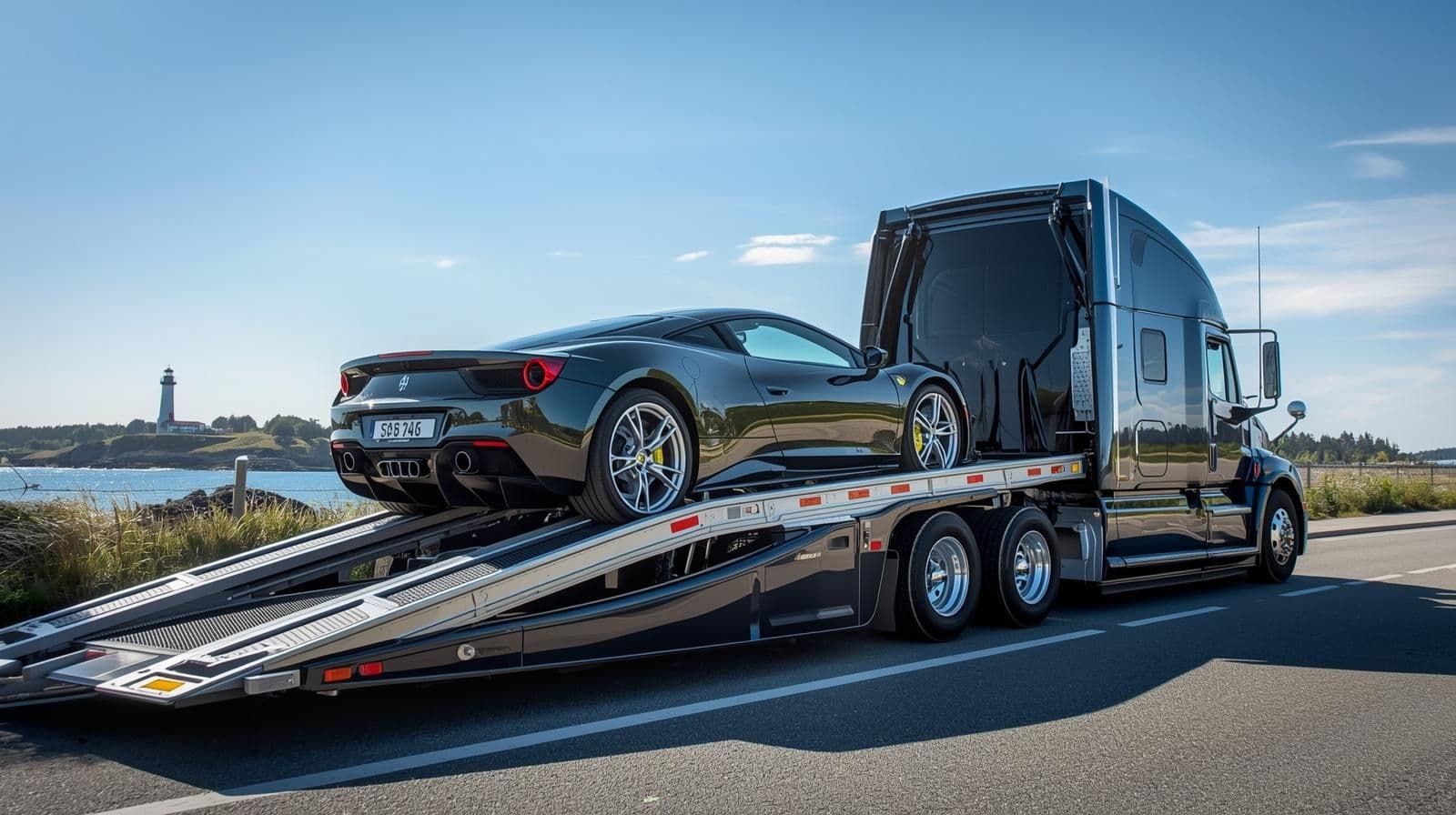
Open transport is what about 90% of vehicles in the country ship on — the same multi-car trailers you see on the interstate. It is the cheapest option and perfectly safe for daily drivers, sedans, and standard SUVs. Your car is exposed to weather and road grime, which washes off.
Enclosed transport puts the vehicle inside a fully covered trailer, shielded from rocks, road salt on winter routes, and prying eyes. It costs noticeably more and has fewer trucks running, so it books slower. It earns its premium for classic cars, exotics, low-clearance sports cars, and anything where a stone chip is a serious problem. For a $25,000 commuter, open is the rational choice; for a restored collector car crossing the Rockies in February, enclosed is cheap insurance.
How Long Cross-Country Shipping Takes
Transit time tracks distance and how busy the lane is. A carrier drives roughly 400 to 500 miles a day under federal hours-of-service limits, then add pickup and delivery scheduling on top.
- Short routes (under 1,000 miles): 1 - 4 days
- Mid-distance (1,000 - 2,000 miles): 3 - 6 days
- Cross-country (2,000+ miles): 6 - 9 days
Weather is the wild card. Winter storms over mountain passes — the Donner Pass on I-80, Eisenhower on I-70, the Siskiyous on I-5 — close roads and add days. Hurricane season can stall Gulf and Southeast routes in late summer. Booking on a popular lane with flexible dates is the single best way to keep both the price and the wait down.
How to Keep the Quote Honest and the Move Smooth
- Be wary of the lowest quote — a price well under the market rate usually means the load sits on the board unbooked while better-paying ones move first
- Confirm the carrier's FMCSA authority and insurance before pickup, not after
- Book 1 to 2 weeks ahead; same-week pickups cost more
- Strip personal items — carriers are not licensed to haul household goods, and loose items aren't covered
- Photograph the car from every angle at pickup and note existing damage on the Bill of Lading
Related Guides
How car shipping pricing really works
Open vs enclosed car transport compared
Ready to ship your car? Get an instant quote
Enter your route for real 2026 pricing — about 60 seconds, no email needed for an estimate.
Frequently Asked Questions
Quick answers to common questions about car shipping
Related Articles

Los Angeles to New York Car Shipping: 2026 Route Guide & Costs
Shipping a car from Los Angeles to New York in 2026? Get real cost ranges ($950–$1,300), transit times, cross-country route tips, and seasonal pricing for the LA→NYC corridor.

Cross Country Car Shipping: 2026 Costs, Timelines & Complete Guide
Shipping a car across the country in 2026? Real coast-to-coast costs ($800–$1,400), 7–10 day transit times, major route breakdowns, and how to avoid the common cross-country mistakes.
Electric Vehicle Car Shipping Guide 2026: What EV Owners Must Know
Shipping an EV in 2026? Learn how Tesla, Rivian, and other electric vehicles ship differently — battery prep, carrier requirements, enclosed transport recommendations, and real cost ranges.
Ready to Ship Your Car?
Get an instant quote and experience hassle-free car shipping.
Get Free Quote →