

How to Ship a Non-Running Car in 2026: Costs, Process & Requirements
A car that won't start, won't roll, or won't steer can absolutely be shipped — carriers move project cars, auction wins, mechanical failures, and barn finds every day. But inoperable transport has specific requirements, and getting them wrong at booking causes the single most preventable problem in auto transport: a carrier showing up with equipment that can't load your car.
What Counts as "Inoperable"?
Carriers classify operability in three tiers, and the price difference is real:
| Condition | What It Means | Cost Impact |
|---|---|---|
| Runs and drives | Starts, moves, steers, brakes under its own power | Standard rate |
| Inop — rolls, steers, brakes | Won't start, but wheels turn freely and steering works | +$150 – $250 |
| Inop — doesn't roll or steer | Seized wheels, locked steering, missing wheels, accident damage | +$250 – $400, forklift may be required |
Be precise about which tier your vehicle is in. "It ran when parked" is not a condition report. If the brakes are seized or a wheel is missing, the carrier needs to know — a standard winch can pull a rolling car onto the trailer, but a car that won't roll needs skates, dollies, or a forklift.
How Non-Running Cars Are Loaded
Winch Loading (Standard for Rolling Inops)
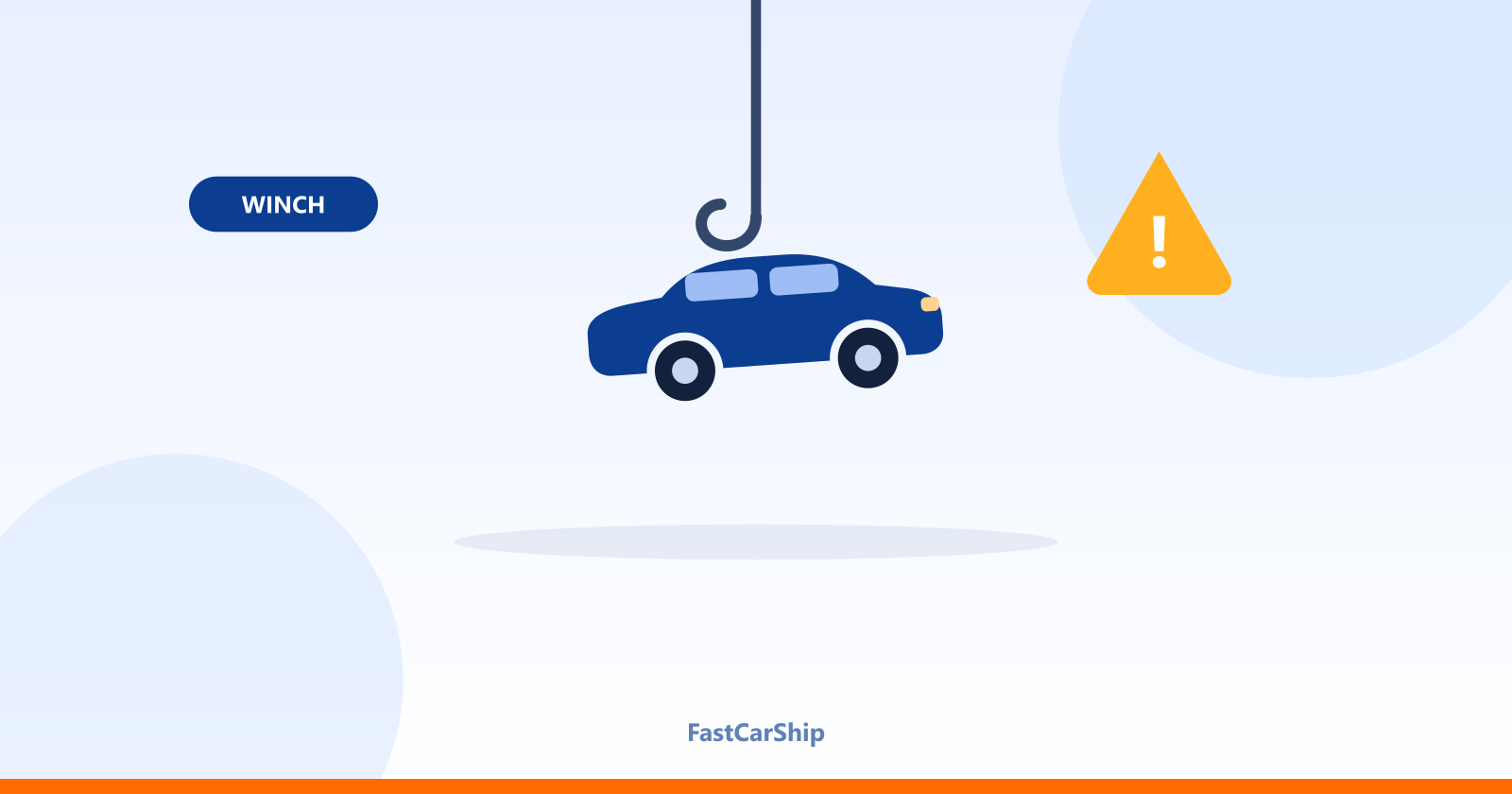
Most inoperable shipments use a carrier-mounted winch: a cable attaches to the vehicle's frame or tow points and pulls it up the ramps while someone steers (if steering works). This requires the carrier to have brought a winch — which is exactly why disclosure at booking matters. Not every truck carries one.
Forklift Loading (Non-Rolling Vehicles)
Cars that won't roll need a forklift at both pickup and delivery, or wheel skates that let the winch drag the car. Forklifts are typically only available at salvage yards, auctions, and commercial facilities — residential pickup of a non-rolling car is significantly harder and sometimes requires a tow to a loadable location first.
What It Costs (2026)
| Route Distance | Running Vehicle | Inop (Rolls/Steers) | Inop (No Roll) |
|---|---|---|---|
| Under 500 miles | $300 – $600 | $450 – $800 | $550 – $950 |
| 500 – 1,500 miles | $550 – $1,050 | $700 – $1,300 | $800 – $1,450 |
| 1,500+ miles | $800 – $1,350 | $950 – $1,600 | $1,050 – $1,750 |
Transit also tends to take 1–4 days longer than standard shipping — fewer carriers have winch equipment, so matching takes more time.
Common Non-Running Shipping Scenarios
Auction and Salvage Purchases (Copart, IAA, Manheim)
The most common inop shipment. Key details: auction yards have forklifts (loading is easy), but they also charge storage fees — typically free for 3–5 business days, then $20–$50/day. Book transport before or immediately after winning the auction, and give the carrier your buyer number, lot number, and gate pass details.
Project Cars and Barn Finds
Often the hardest shipments: rural locations, cars that haven't moved in years, seized brakes, flat or missing tires. Be brutally honest about condition at booking. If the car has sat for a decade, assume it doesn't roll until proven otherwise — air up the tires and confirm the wheels turn before the carrier arrives.
Mechanical Breakdowns
Engine or transmission failure with everything else intact is the simplest inop scenario — the car rolls, steers, and brakes. Standard winch loading applies. One tip: if the issue is just a dead battery or starter, consider fixing it first; a $150 repair can save a $250 inop fee and widen your carrier options.
How to Book Inoperable Transport Right
- State the exact condition at booking: does it start? roll? steer? brake?
- Confirm the quote explicitly includes the inop fee — don't let it surface at pickup
- Verify the carrier is bringing a winch (or that a forklift is available at both ends)
- For auctions: provide lot number, buyer number, and gate pass before pickup day
- Make sure tires hold air and the steering unlocks — fix what's cheap to fix
- Photograph everything, including the specific damage that makes it inoperable
- Have keys ready — even a dead car needs its steering unlocked and transmission in neutral
Frequently Asked Questions
Can you ship a car that doesn't run?
Yes. Carriers ship non-running vehicles daily using winch loading. The requirements: disclose the condition at booking, expect a $150–$300 surcharge, and confirm whether the vehicle rolls and steers — that determines the equipment needed.
How much extra does it cost to ship a non-running car?
$150–$250 extra if the car rolls, steers, and brakes. $250–$400 extra if it doesn't roll, since forklift or skate loading is required. These are added to standard route rates.
What happens if I don't tell the carrier my car doesn't run?
The driver arrives without a winch, can't load the car, and you pay a dry-run fee ($150–$250) while the shipment goes back into the queue — now flagged inop anyway. Disclosure costs less than concealment, every time.
Can I ship a car with no wheels or seized brakes?
Yes, but it requires forklift loading at both ends or wheel skates. This works best between commercial locations (salvage yard to shop). For residential endpoints, you may need a local tow to a loadable facility first.
Shipping an auction win or project car? Get an instant quote and select "non-running" — winch-equipped carriers, accurate pricing upfront.
Ready to ship your car? Get an instant quote
Enter your route for real 2026 pricing — about 60 seconds, no email needed for an estimate.
Frequently Asked Questions
Quick answers to common questions about car shipping
Related Articles
International Car Shipping: How to Ship a Car Overseas (2026 Guide)
Shipping a car overseas costs roughly $1,500–$5,000+ and takes 2–8 weeks by ocean freight. RoRo vs container, customs and duties, the documents you must have, and how to avoid the costly first-timer mistakes.
Can You Ship a Leased or Financed Car? 2026 Rules & Permissions
Yes — you can ship a car you're still paying off or leasing, and you don't need the lender's permission for domestic transport. Where permission does matter (out of state, overseas), insurance rules, and what leaseholders must check first.

Shipping a Car to Puerto Rico: 2026 Cost, Process & Requirements
Shipping a car to Puerto Rico costs roughly $1,000–$2,500 and takes 1–2 weeks by ocean carrier from Jacksonville. Port options, the excise (Hacienda) tax that surprises everyone, required documents, and the full step-by-step.
Ready to Ship Your Car?
Get an instant quote and experience hassle-free car shipping.
Get Free Quote →